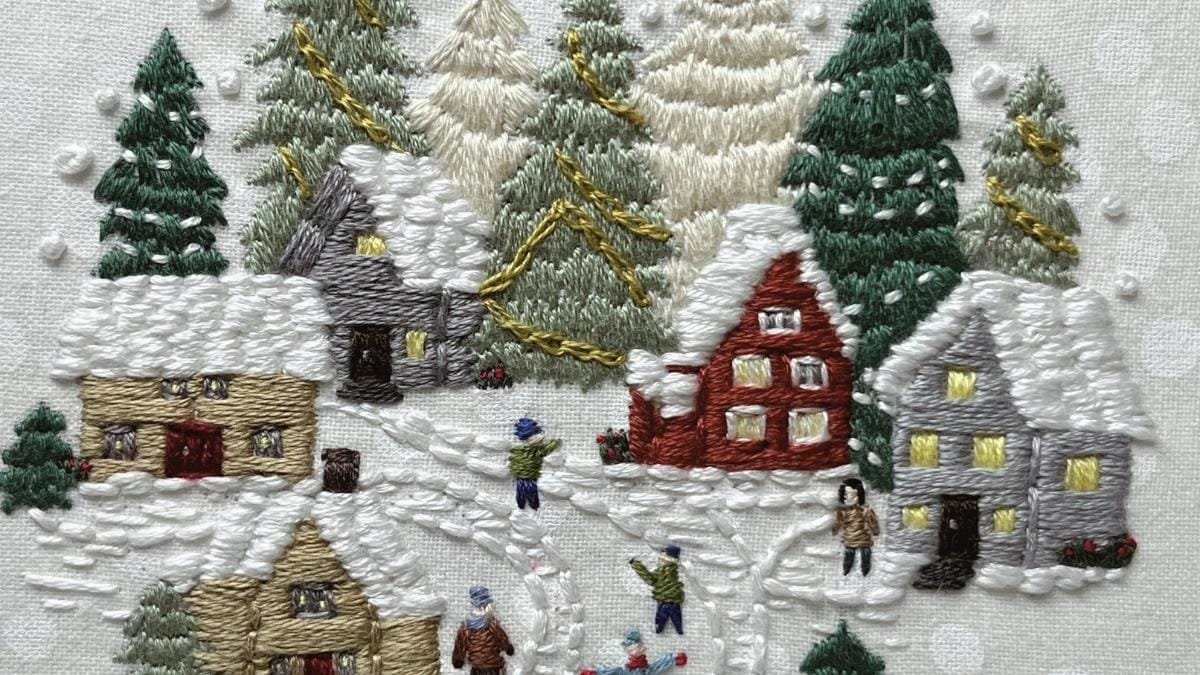
This winter, I worked on a Christmas village embroidery kit I found on Amazon as part of my ongoing stitching practice. I’ve been doing embroidery for a few years, but not consistently, so I still approach projects with a beginner’s mindset at times.
I chose to shrink and print the pattern onto my own polka dot fabric. At first, this seemed like a small adjustment, but it ended up shaping the stitching experience. Reducing the pattern in size made the work more challenging than I expected, especially as someone who doesn’t stitch consistently.
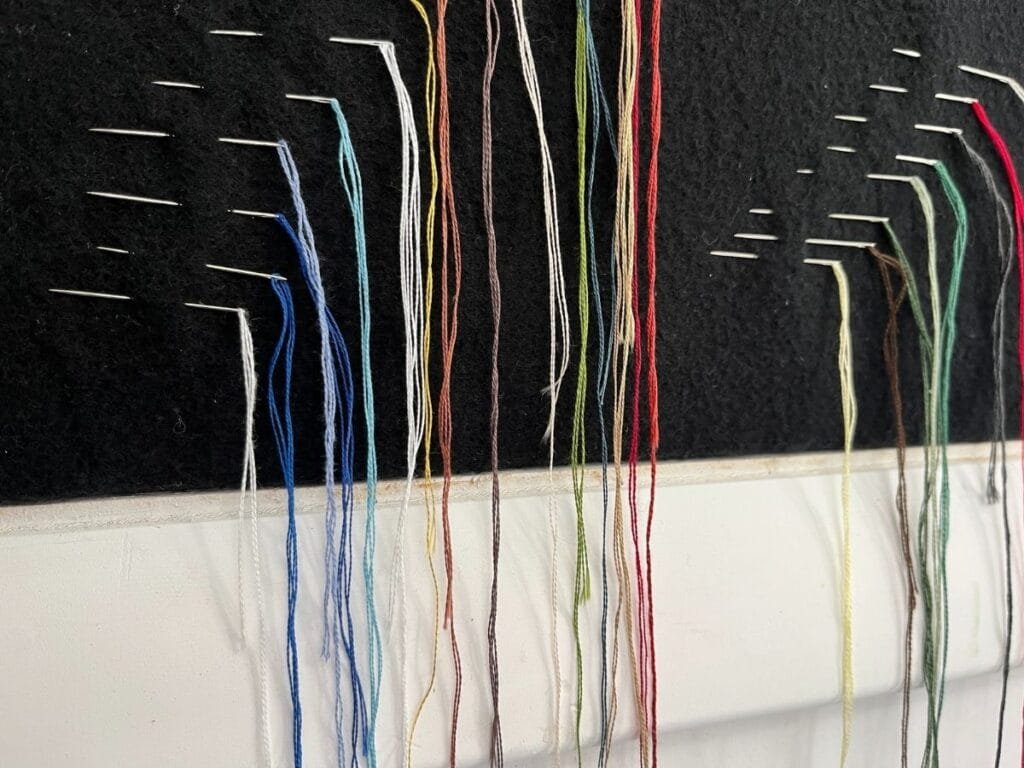
I also used my own DMC threads rather than the threads included with the kit, mostly because I’m familiar with them. Working with materials I know helped me manage the added difficulty of working at a smaller scale.
One of the main challenges I encountered was the fabric I switched to. I thought the printed dots would be cute, but the printed surface had a thin, slightly tacky layer that made pushing the needle through more difficult than with plain fabric. This meant that even simple stitches sometimes required extra effort, and I found myself adjusting my technique to keep the needle moving smoothly. In the future, I’ll likely avoid fabrics with prints like this and stick to plain or more subtly patterned fabrics, which are easier to work with when stitching smaller designs. You won’t have this problem using the fabric that comes with the kit.
Exploring the Pattern
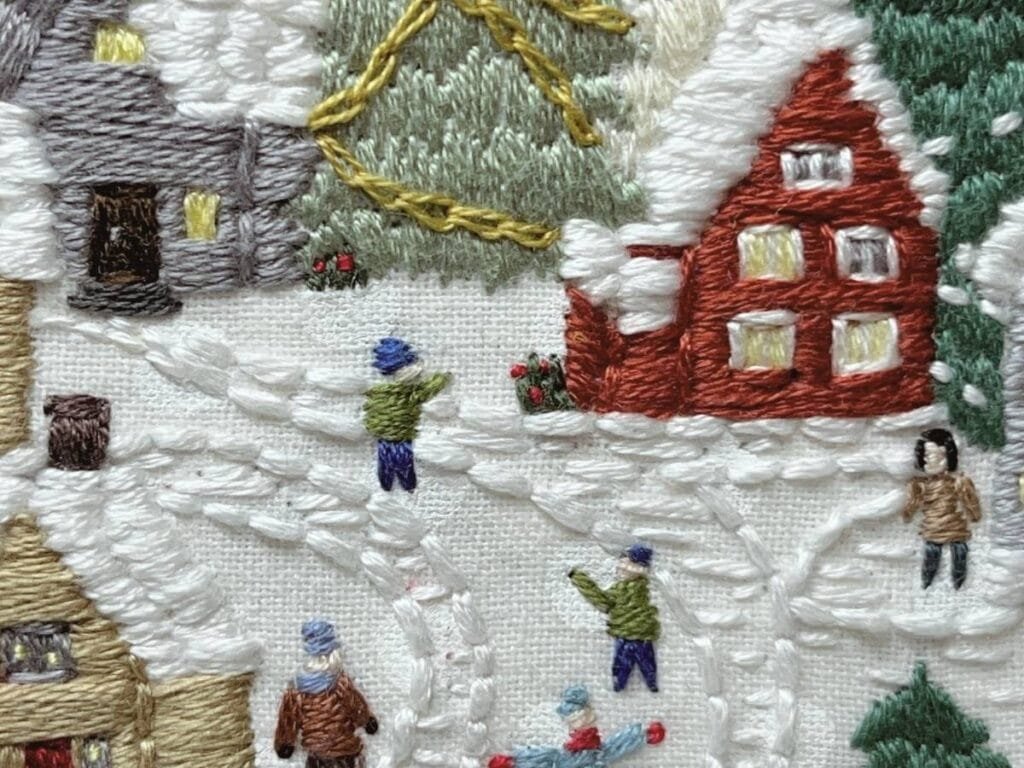
The pattern features small houses, scattered trees, and snowy details arranged into a cozy village scene. Even with some prior embroidery experience, working at a smaller scale required extra attention to spacing, stitch placement, and proportion. Because I haven’t stitched consistently over the years, there were moments when I had to pause, rethink, or experiment as I went.
Details like windows, rooftops, and snow became denser and more demanding than expected. At times, the tacky printed surface of the polka dots on my fabric made stitching slower and required more patience. Rather than judging mistakes or imperfections, I focused on completing each section at a comfortable pace and learning along the way.
These challenges weren’t about correcting or improving the design — they simply reflected the realities of working with the materials and scale I chose.
Working Through Challenges
Because I was working at a smaller scale, with my own printed polka dot fabric and my own threads, I needed to take things slowly. I found that breaking the project into sections helped me stay organized and avoid feeling overwhelmed. For example, I would focus on one house or tree at a time, noticing how each stitch behaved on the tacky fabric and adjusting tension or needle angle as needed.
I also learned to give myself permission to pause and regroup. Sometimes a stitch didn’t go as planned, or a thread caught on the print — instead of stopping or judging the mistake, I treated it as part of the process. Paying attention to these small challenges and taking the time to adjust helped me finish the piece without frustration.
Reflections and Recommendations
The finished village came together into a cozy winter scene, even though it looks quite different from the kit image. For me, the most rewarding part of this project wasn’t the end result, but the experience of moving slowly, noticing what worked, and persisting through challenges like the polka dot fabric and small-scale stitching.
At its original scale, the kit is approachable for stitchers of all levels. Shrinking the pattern increased the difficulty, particularly when paired with the fabric I chose, which was harder to stitch through. Working smaller slowed the process but encouraged patience, attention to detail, and an appreciation for learning as I went.
For anyone who stitches intermittently and is curious about trying a winter-themed project, this kit offers a manageable starting point. Whether followed exactly or approached gradually, it supports an experience centered on learning and enjoying the act of stitching without pressure.