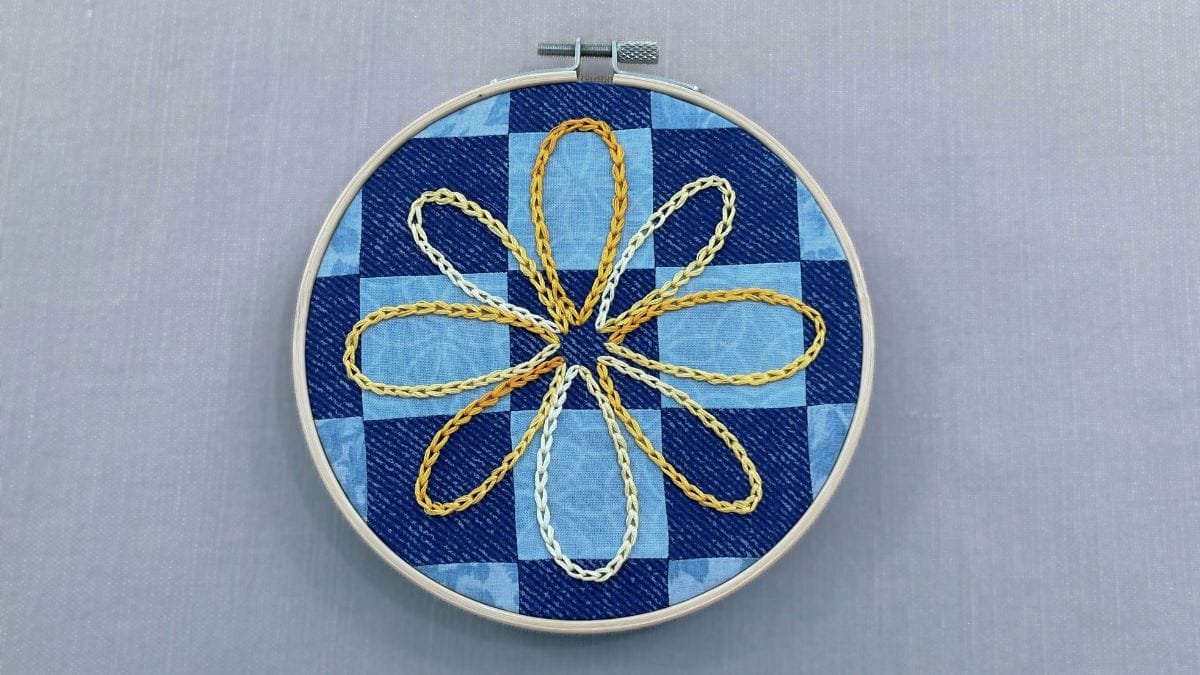
This project began as a simple experiment with a chain stitch flower, but it quickly became something more meaningful. I stitched a bold flower design onto a pieced quilt block and discovered how well hand embroidery and patchwork work together. Combining these two crafts feels like opening a new creative door, and I’m excited to see where it leads.
The fabric I used makes this project especially personal. Most of my cotton quilting fabric once belonged to my grandmother. The prints are bright, colorful, and full of history. While these fabrics are beautiful, they can be challenging for hand embroidery when the background is dark or busy. Still, I feel determined to use them in new ways instead of letting them stay folded away.
Hand embroidery on quilt blocks allows me to play with texture and balance. A large flower stitched boldly stands out against the patterned fabric and creates an undeniable focal point. This mix of old fabric and a new stitching concept feels both creative and meaningful. Even though I don’t know where this journey will take me, I love exploring how embroidery can give quilt blocks a new meaning.
This flower design is proof that trying new ideas can lead to big inspiration. With just one stitch and one block, a whole new idea begins to grow.
Chain Stitch Flower Design Tutorial on YouTube
When I planned this piece, I wanted a stitch that felt strong and confident but stayed simple and relaxing to work. The chain stitch was the perfect choice. Its raised texture stands out clearly against patterned fabric, and its curved shape works beautifully for flower petals.
I chose DMC Color 90 variegated floss in shades of yellow because it contrasts nicely with the deep blue background. The color changes within the thread add movement and warmth to the flower. Instead of separating the strands, I used all six strands of floss to make the design bold and easy to see.
One of the things I enjoy most about this project is how quickly it stitches up. The chain stitch flower is simple, yet it makes a strong statement. The embroidery does not get lost in the busy fabric underneath. Instead, it brings balance by adding a clear shape over the patchwork design.
This project also shows how hand embroidery and quilting can support each other. The sharp angles of the quilt block are unlike the curved lines of the chain stitch. In return, the structure of the block gives the flower a striking background. Together, they create a design that feels both playful and grounded.
Because many stitchers like to learn visually, I recorded the process of completing one petal from start to finish and shared it on YouTube. In the video, you can watch each loop of the chain stitch form a petal and see how the variegated floss shifts in color as the flower grows. This makes the pattern feel more approachable and easier to try at home.
The video also shows how the embroidery interacts with the patterned fabric, which can be helpful if you want to stitch on quilt blocks or darker prints. You can pause, rewind, and stitch along at your own pace, making it a relaxed and beginner-friendly project.
Free PDF Pattern for the Chain Stitch Flower
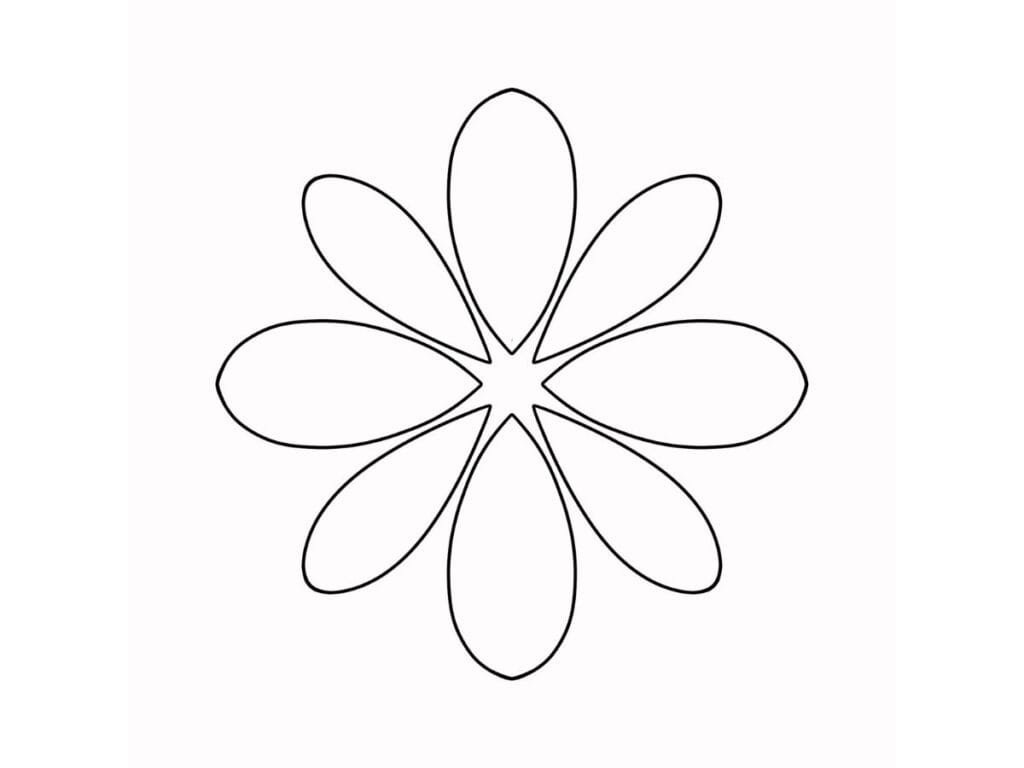
To make this project easy to recreate, I designed a free PDF pattern. You can download the free Chain Stitch Flower PDF pattern and use it right away or save it for later. The pattern is sized for a 6-inch embroidery hoop, which works well for many quilt blocks and small embroidery projects. If you prefer a larger or smaller flower, the design can be easily scaled to fit your needs.
This pattern is ideal for practicing chain stitch and for using up scrap fabric and floss colors you might otherwise not use. It also works well for gifts, framed embroidery, or decorative pieces like pillow shams. Because the design is simple, it is a project you could finish in a day.
You can change the look of the flower by choosing different colors, stitches, or thread thicknesses. A soft pastel floss creates a gentle, calm design, while bright or variegated thread makes the flower bold and lively. Textured threads can add even more interest if you want to experiment.
Tracing Petals on Dark Fabric with Paper Cutouts
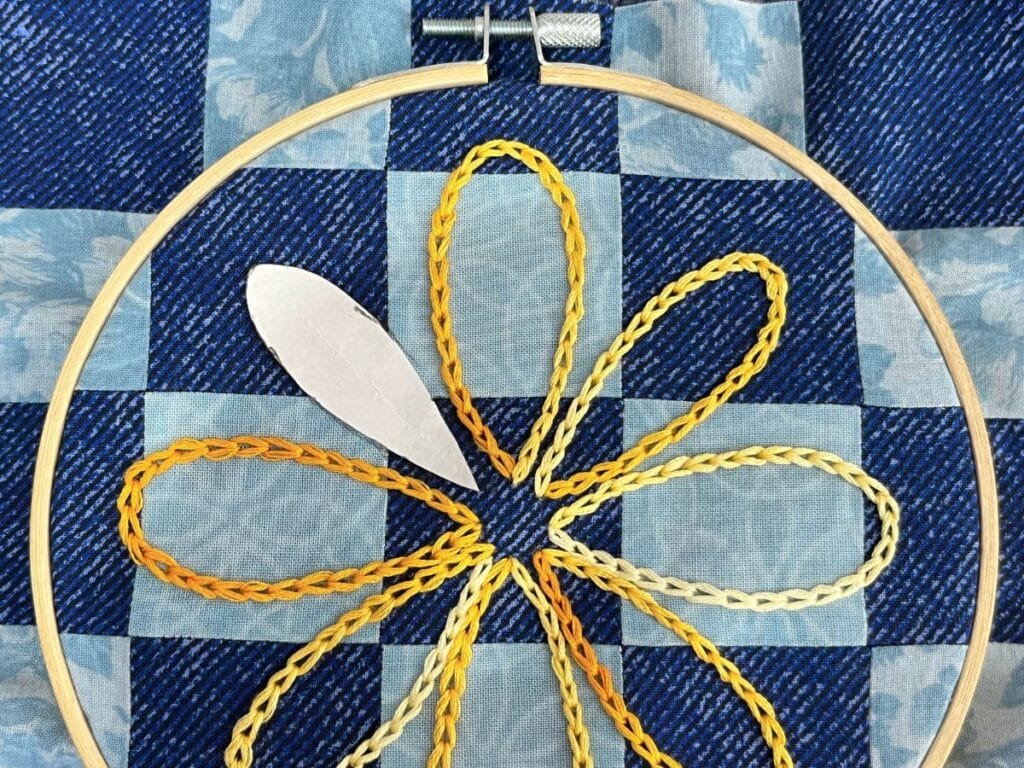
Transferring a pattern onto dark fabric can be one of the trickiest parts of embroidery. Printed cotton and deep colors make it hard to see the pattern under the fabric. To solve this problem, I cut out the petal shapes from paper and used them as small stencils.
I placed a paper petal onto the fabric and traced around it with a Frixion erasable pen. Even then, the lines were faint on the dark blue background. To make them easier to follow, I adjusted my lamp so the light hit the fabric just right while I stitched.
Luckily, the flower shape is simple and forgiving. Once I began stitching, the chain stitch helped guide the curve of each petal. I did not need to see every line perfectly for the design to come together.
In the future, I would like to try other marking tools made for dark fabrics, such as chalk pencils. These tools may show up more clearly and make tracing easier. For now, my current method worked well and allowed me to move forward without frustration.
This part of the process reminded me that embroidery is not only about stitching. It is also about learning how to adapt to different materials. Each fabric brings its own challenge, and each challenge builds confidence for the next project.