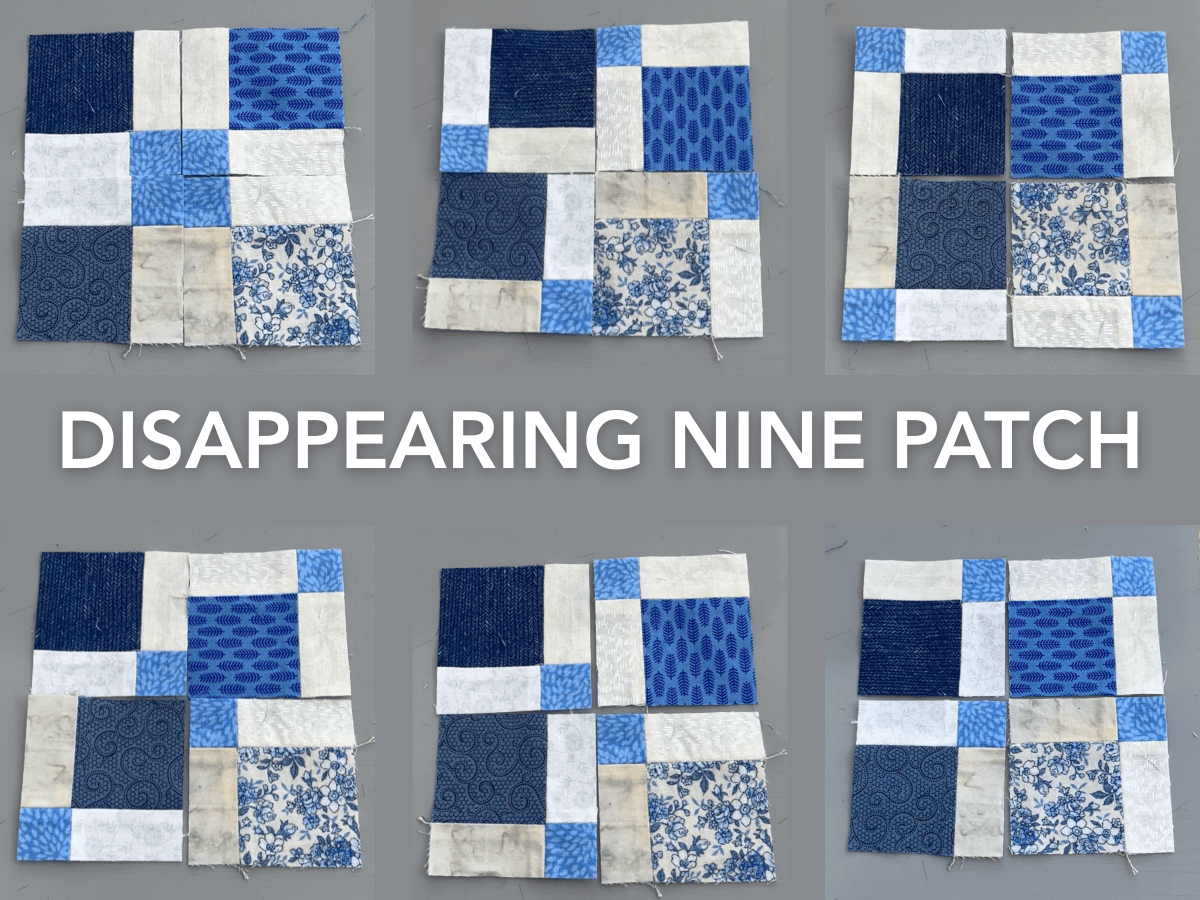
It’s a rainy afternoon, the kind where sewing feels like self-care. Therefore I’m working on my table runner for the coffee table in our living room, and this project has been more than just stitching fabric together, it’s been part of my healing. Through this process, I’ve learned how the disappearing nine patch mirrors my own growth. Each cut and rearrangement reminds me that change can be beautiful, even when it feels messy. Today, I’m sharing five common layouts that have taught me something about patience, perspective, and letting go of perfection. When I sew, I’m not just piecing fabric. I’m piecing together focus, courage, and emotional strength, one block at a time.
Disappearing Nine Patch Variations
Color plays a role in every disappearing nine patch design. For this project, I used scraps of fabric, but I stayed within two color palettes, shades of blue and creamy neutrals. This balance feels soothing, like mindful breathing on a stressful day. A scrappy quilt block can be wild or calming, depending on your choices. Let your intuition guide you. If bright colors lift your mood, use them. If you need peace, choose soft shades and gentle contrasts. The colors, patterns, and values you pick will shift the emotion of each layout. The harmony or tension you create becomes a reflection of your inner world.
The Foundation
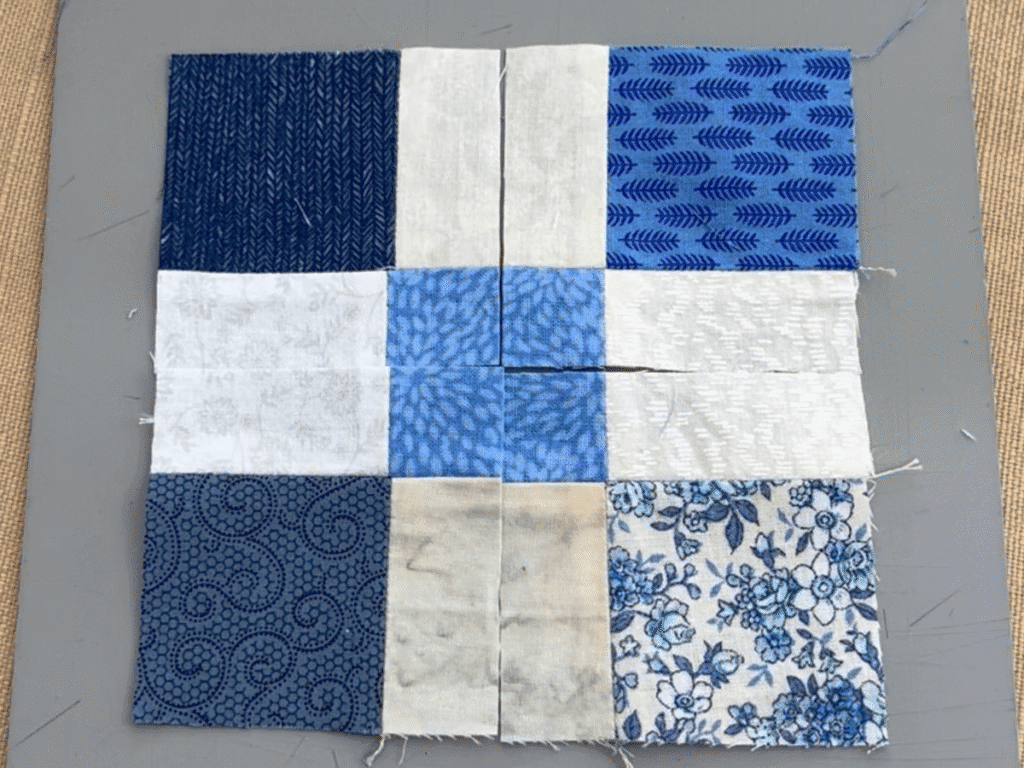
Before a disappearing nine patch can transform, it begins as something simple. I made my nine patch from 2 inch squares, using a quarter inch seam allowance, and when finished, the block measures 5 inches. Then comes the part I love, cutting it into four equal squares. What once was whole becomes something new, ready to be rearranged into endless designs. The final disappearing nine patch block measures 4 ½ inches if you start with 2 inch squares. This step reminds me of emotional regulation work in DBT. We start with mindfulness skills like staying focused, one mindfully in the moment. Then we cut, rework, and reshape until things fit better. Sewing in this way isn’t just about fabric. It’s a practice of building, noticing, and trusting that even after things get pulled apart, beauty remains.
If you want to see how I assemble disappearing nine patches I have a YouTube video showing how I chain piece four nine patches at a time.
The Traditional Disappearing Nine Patch
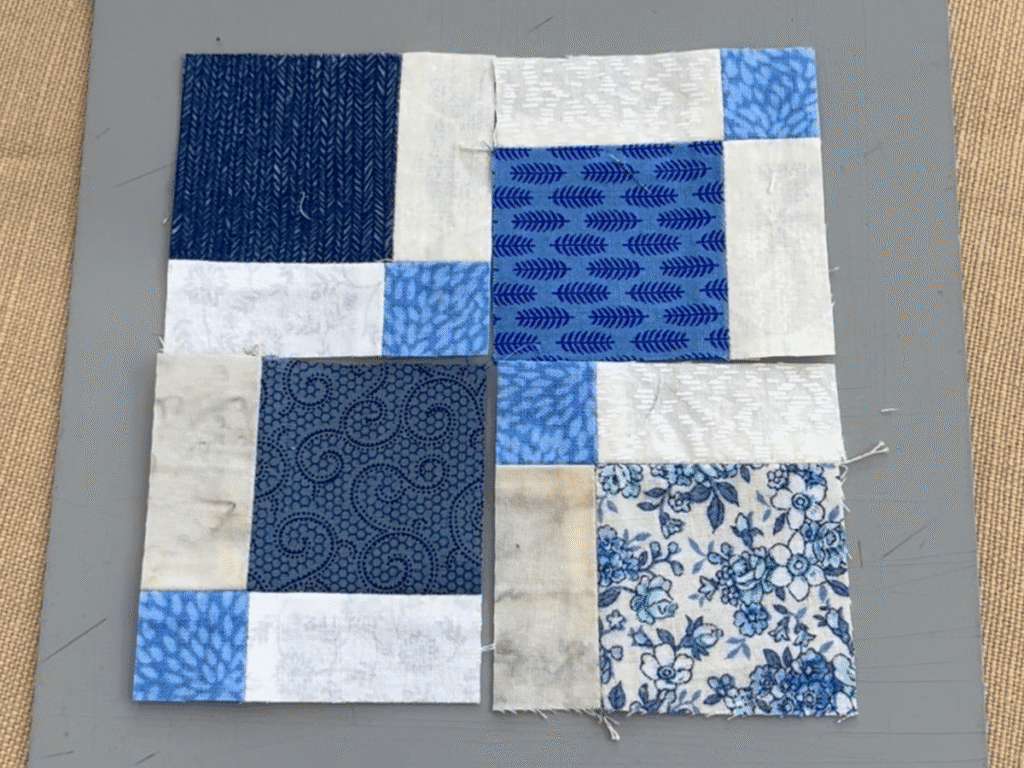
This layout is what most quilters might picture when they hear disappearing nine patch. It’s balanced, familiar, and comforting. Each small square and large rectangle fits together like a steady breath, inhale, exhale, repeat. I love this version because it doesn’t ask for anything complicated. It reminds me that sometimes sticking with the classic approach is enough. When my emotions feel scattered, sewing a simple layout helps me find structure again. Every press of the iron feels like grounding. Every stitch feels like progress. It’s not about rushing to finish. It’s about enjoying the rhythm that keeps your hands busy and your mind calm, especially on a rainy day when everything outside slows down.
A Lovely Rectangular Center
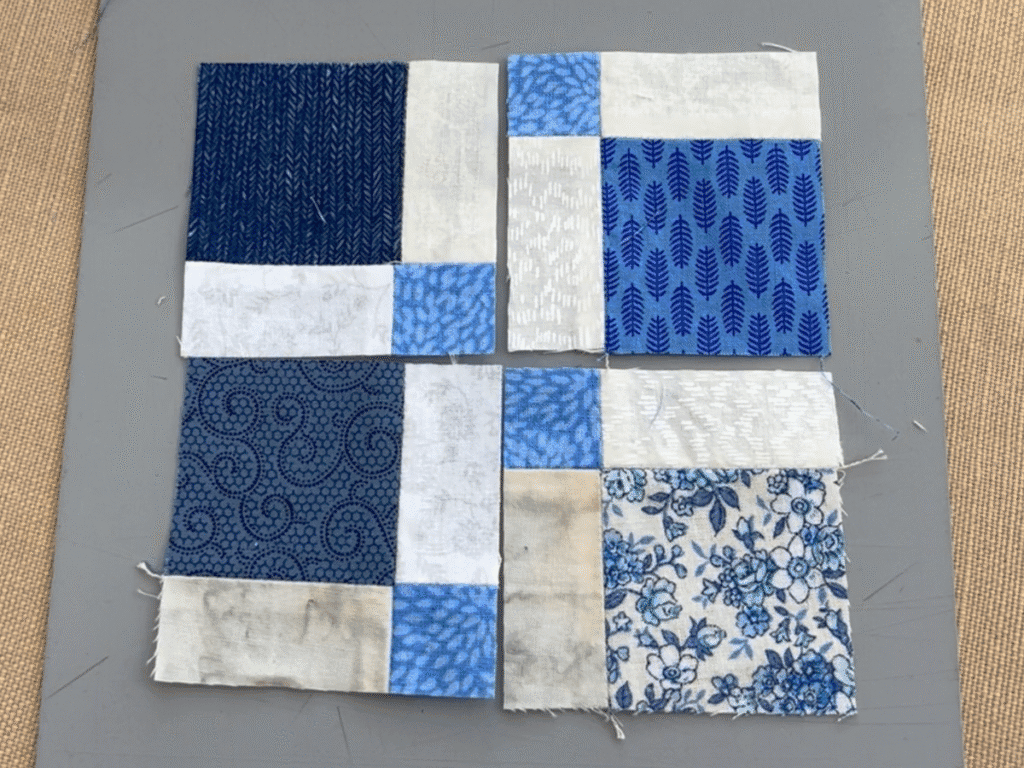
The second disappearing nine patch layout forms a rectangular center that naturally draws the eye inward. I think of it as the “focus block.” It reminds me of mindfulness, centering your attention, even when thoughts want to wander. The rectangle feels stable and strong, and it gives a sense of direction to the design. When I work on this layout, I notice how easy it is to get lost in the joy of designing. The fabric moves under the presser foot, the rain taps on the roof, and for a few quiet moments, my mind softens. This layout encourages both visual and emotional balance. It’s a small reminder that when life feels pulled apart, centering yourself can make everything fall back into place.
The Windmill and the Meaning We See
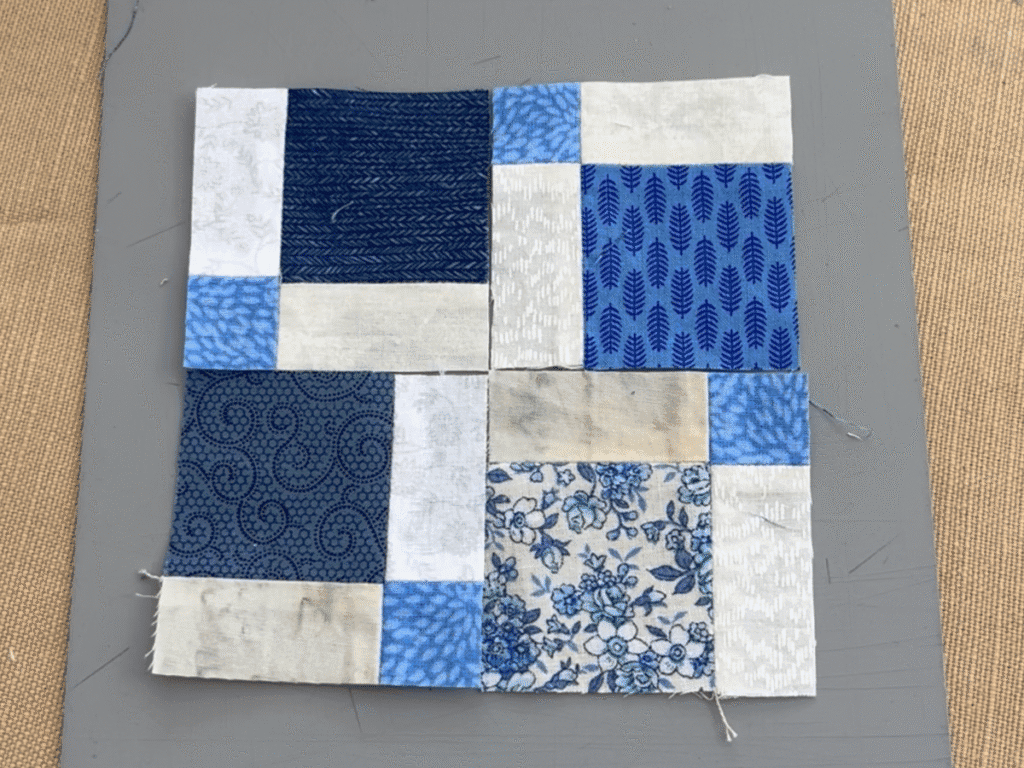
This layout sparked an unexpected conversation. My husband pointed out that this design looked similar to a swastika. That observation stopped me for a moment. After researching, I learned that this quilt pattern has, peaceful meanings—a windmill, a sun symbol, a sign of good fortune. In DBT, there’s a concept that more than one thing can be true at once. Everyone has a unique perspective therefore interpreting things differently. This design reflects that truth perfectly. Some people may feel uncomfortable with it, while others see only motion and symmetry. Both views are valid. I haven’t decided whether I’ll use this layout in a project, but it serves as a reminder that perspective matters. Like therapy, quilting asks us to hold space for complexity, acknowledging what feels uneasy without needing to erase it.
Borders and Cornerstones
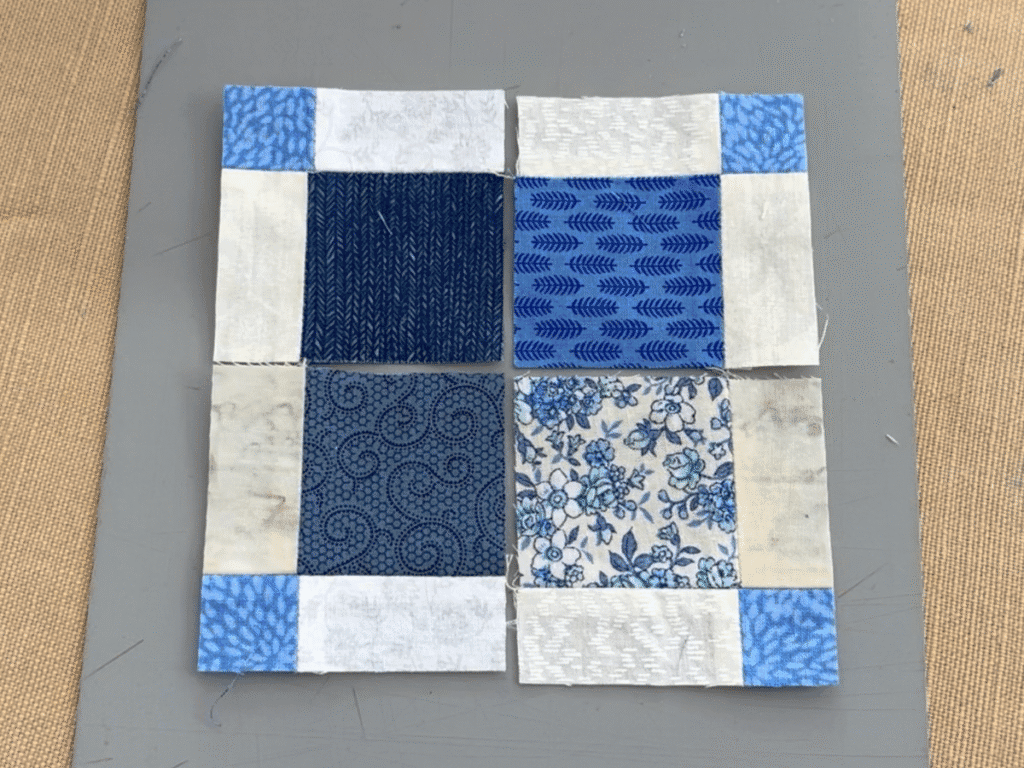
The fourth disappearing nine patch layout has a beautiful structure with clear borders and tiny cornerstones. It looks like a frame within a frame, and that sense of containment feels grounding. When emotions feel big, structure helps us feel safe. That’s true in sewing and in therapy. The small squares in the corners act like anchors, holding everything steady while the larger patches breathe in the middle. I think of this as emotional containment, building boundaries that protect the beauty within. This design brings comfort and order to my creative process. Each border reminds me that it’s okay to take up space, and each seam teaches me that boundaries can be beautiful, not restrictive.
Cornerstones and Sashing for the Table Runner
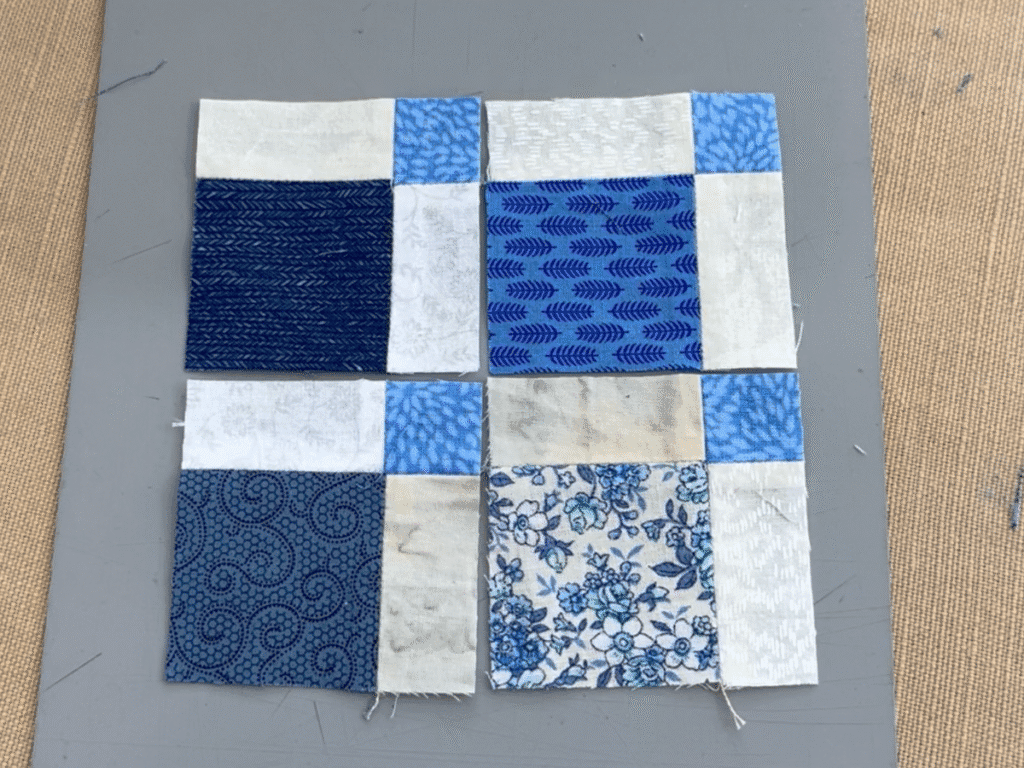
This final disappearing nine patch layout is the one I chose for my table runner. It creates cornerstones and sashing that guide the eye along the length of the piece. I love how the pattern feels like steady movement, but flowing. It mirrors what I’m learning in DBT, progress doesn’t have to be dramatic to be meaningful. Some days, growth looks like quietly stitching pieces together while rain falls outside. This layout feels optimistic, like small steps toward peace if mind. It ties all the lessons from the other designs together, balance, containment, focus, and acceptance.