Winter in upstate New York has a way of slowing everything down. The days feel shorter, the light softer, and the quiet heavier. During these colder months, hand embroidery has become more than a hobby for me. It’s something grounding, steady, and deeply supportive of my mental health. Sitting with fabric in my lap and a needle in my hand helps me stay present when my thoughts want to wander or spiral.
Early on, I want to share that this post includes a free small hand embroidery pattern for this design. You’re welcome to use it if you’re looking for a stitching project. I’ll talk more about how I approached it as I go, but if you like open-ended designs that leave room for personal choice, it may be a good fit for you.
This project began with a simple goal: I wanted to practice small stitches. I was especially interested in working with just one strand of DMC floss at times, even though that level of detail can feel intimidating. I decided to create my own small hand embroidery pattern using design elements from Canva, approaching it as a beginner who is still learning and experimenting.
I’ve been embroidering for a few years now, but I still consider myself very much a beginner. I’m not a teacher, and I don’t claim expertise. I’m simply someone who enjoys sharing what I’m learning as I go. This blog post is part of that practice—showing up as I am, rather than waiting for a future version of myself who feels more “ready.”
If you’re also learning embroidery, or if you’re drawn to small projects you can stitch slowly and gently, I hope this resonates with you.
Why I Decided to Make My Own Small Hand Embroidery Pattern
The idea to make my own small hand embroidery pattern came from a desire to practice without pressure. I wanted something manageable in size—something I could work on without feeling overwhelmed. Small projects feel approachable, especially when energy and focus are limited. At the same time, working small asks for patience and care, which felt like a meaningful challenge.
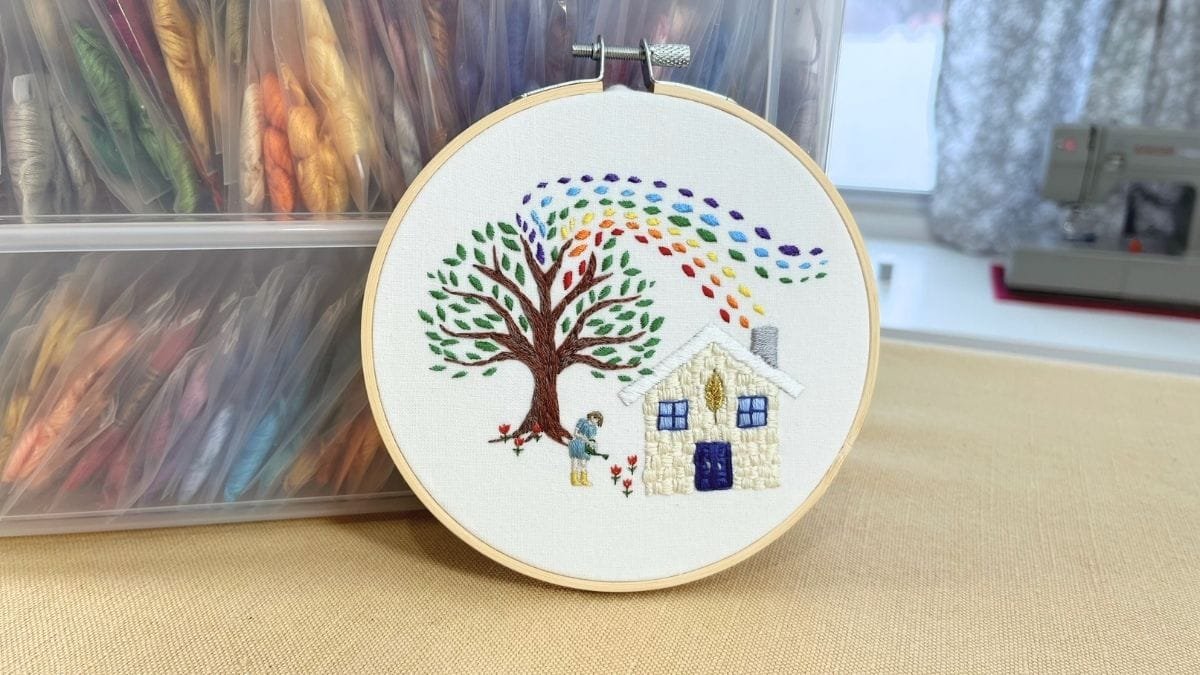
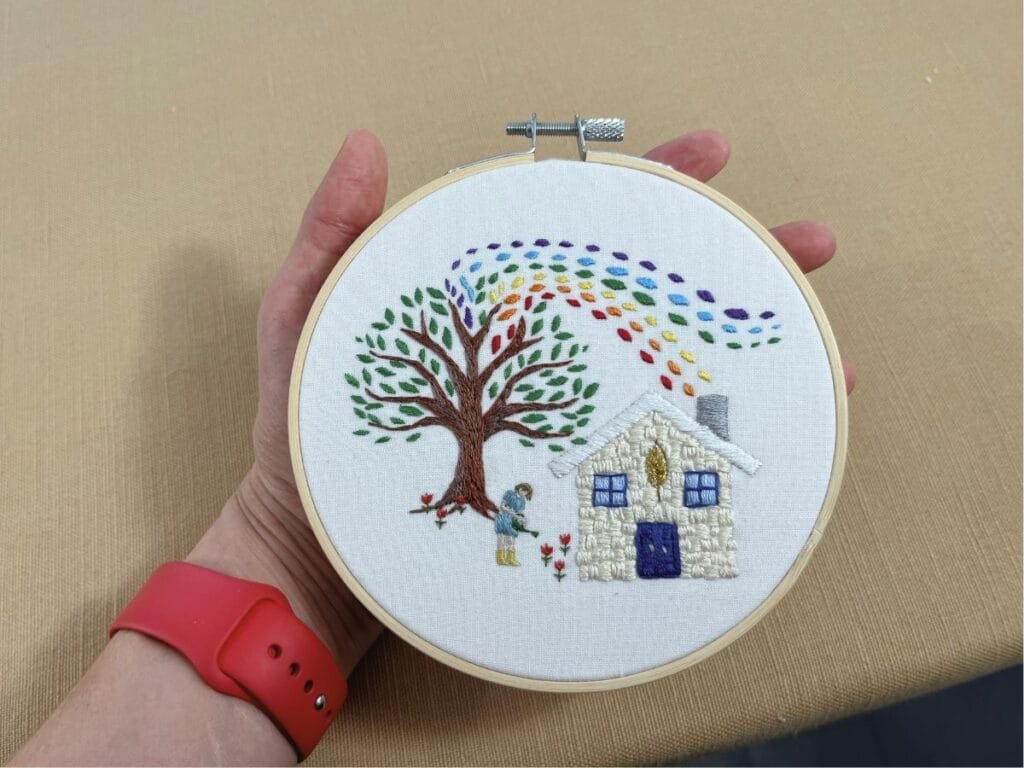
I used Canva to build the design because it allowed me to play freely with shapes and layout. I wasn’t trying to invent anything groundbreaking. I combined simple elements that felt meaningful to me: tulips, a woman watering them, a house, and a tree. Over the tree, I added rainbow-colored leaves that curve gently above the house, forming a soft rainbow shape.
The scale of the pattern stayed intentionally small. I wanted to practice tiny stitches and experiment with using one strand of floss, even though I knew that would be more difficult. There was no plan for perfection. Instead of mapping out stitch styles in advance, I let the process unfold as I worked.
Creating a small hand embroidery pattern this way reminded me that learning doesn’t have to be rigid. Some of the most meaningful practice comes from curiosity rather than structure. This approach helped me stay flexible and kind to myself throughout the process.
Stitching With Intuition
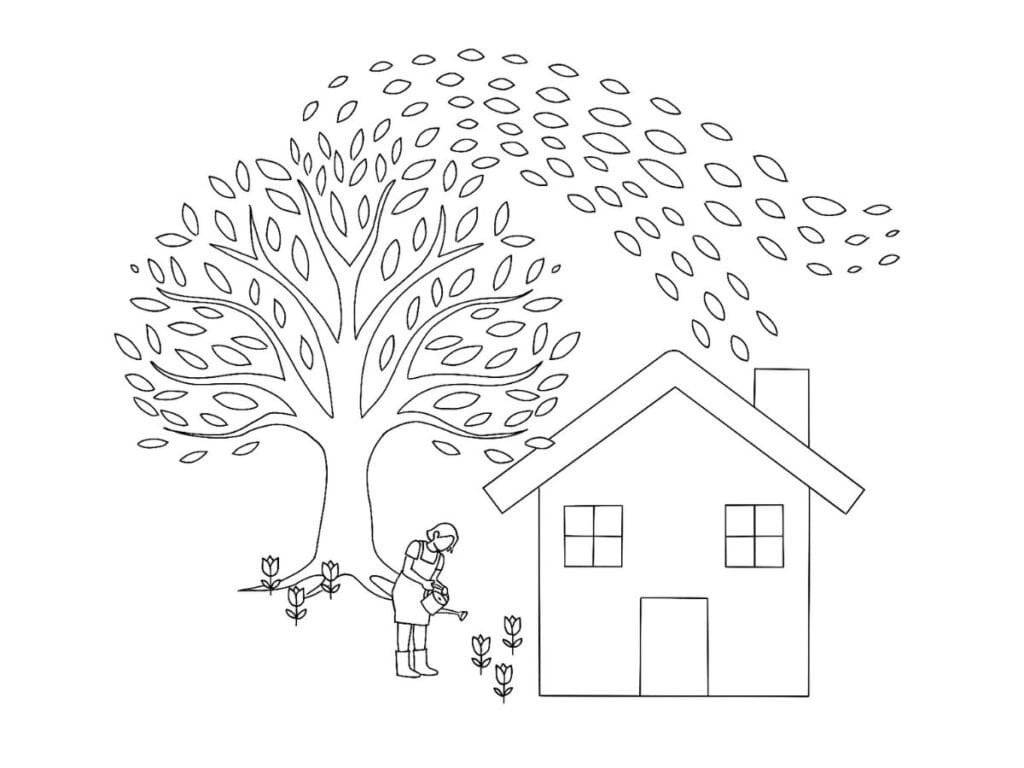
One of the most important choices I made with this project was keeping the pattern open-ended. Rather than prescribing specific stitches or colors, I treated the design as an outline—a starting point rather than a set of rules.
That choice might feel unusual in a world full of step-by-step tutorials, but for me, it was freeing. It removed the pressure to do things “correctly” and allowed me to focus on how the stitching felt instead.
I often struggle with the idea that I need to be an expert before I can share anything. My mind tells me to wait, to practice more, to be better. But waiting for perfection has kept me stuck more times than I can count. With this project, I gave myself permission to work without predetermining every decision in advance.
As I stitched, I made choices in the moment. Sometimes a stitch worked beautifully. Other times it didn’t. I accepted uneven spacing, small flaws, and changes in direction. Instead of labeling those moments as mistakes, I tried to see them as part of the learning process.
This way of working mirrors what embroidery has been teaching me over time. Letting go of control helped me stay present. I wasn’t stitching for an audience or approval. I was stitching to learn, to calm my nervous system, and to see what might happen if I trusted myself a little more.
Being a Beginner and Sharing Anyway
Calling myself a beginner still feels honest, even after a few years of stitching. I haven’t practiced enough to feel confident claiming anything beyond that. For a long time, I believed that meant I shouldn’t blog, post, or share my work yet.
Those thoughts can be loud and convincing. They tell me my ideas are unrealistic and that putting myself out there is embarrassing or pointless. That kind of thinking isn’t helpful—or kind—but it still shows up, especially when I finish a project and consider sharing it.
Lately, I’ve been practicing noticing those thoughts without letting them stop me. Growth sometimes happens in public. Waiting until I feel perfectly prepared might mean waiting forever. Sharing as a beginner allows space for documenting, reflecting, and connecting.
This small hand embroidery pattern represents that shift. I’m sharing it not because it’s flawless, but because it’s real. It reflects where I am right now. If it helps someone else feel less alone in their learning, that feels meaningful to me.
How Hand Embroidery Supports My Mental Health
Hand embroidery has become a quiet anchor for me during the winter months. The repetitive motion of stitching helps slow my breathing and soften my thoughts. When everything feels heavy, embroidery gives my hands something steady to do and my mind something gentle to focus on.
I’m about eight months into DBT therapy, and it has helped me understand how important grounding activities are for emotional regulation. Stitching fits naturally into that space. I can feel the fabric, see the thread, and follow the needle as it moves in and out, keeping me rooted in the present moment.
Working on this small hand embroidery pattern often felt meditative. I stitched when I had energy and rested when I didn’t. Some days I only completed a small area, and that was enough. The goal wasn’t productivity—it was care.
Embroidery doesn’t fix everything, but it offers a pause. And sometimes, that pause makes all the difference.
The Meaning Behind the Rainbow Leaves
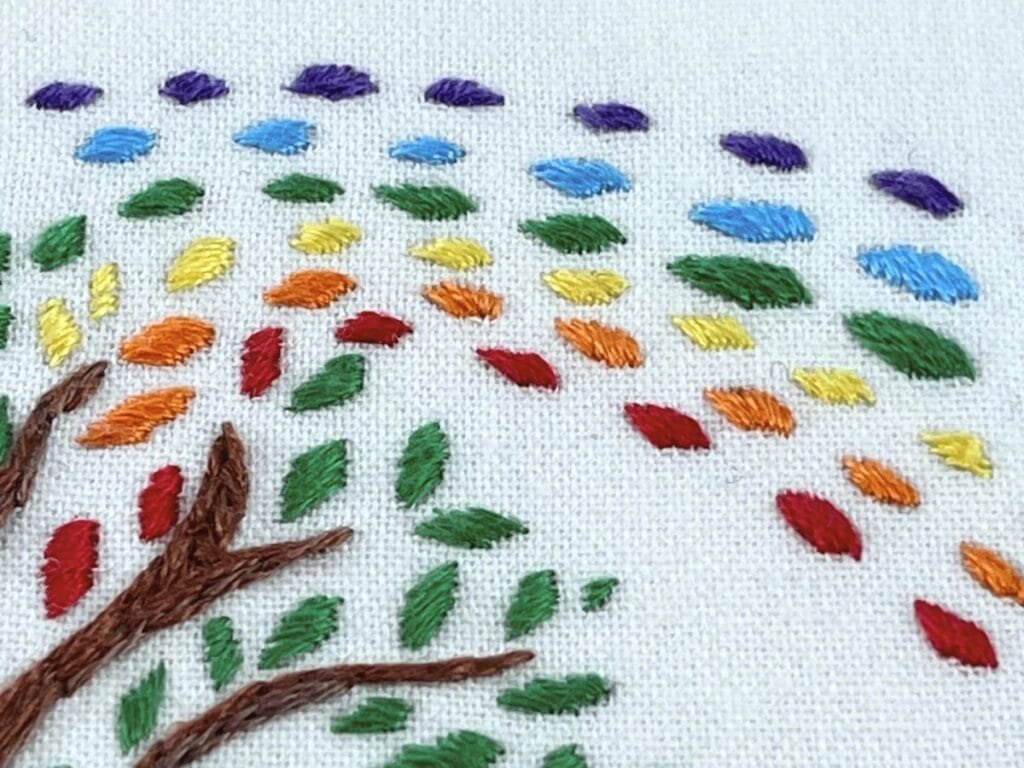
One of the most personal elements of this design is the rainbow leaves flowing away from the tree. They were inspired by a DBT meditation called leaves on a stream, where thoughts are placed on leaves and allowed to float by without judgment.
I adapted that idea visually. Instead of water, I imagined the leaves carried by wind, forming a rainbow shape above the house. For me, the rainbow represents movement and hope. The leaves aren’t stuck—they’re passing through.
Stitching these leaves became a quiet reminder that thoughts come and go. I didn’t need to fix them or push them away. I could notice them and keep stitching. Using multiple colors added to that sense of openness and variety.
This pattern isn’t just decorative for me. It holds a story and a practice that helps me cope. Sharing that feels vulnerable, but also honest.
Working Small: What I Loved and What I Didn’t
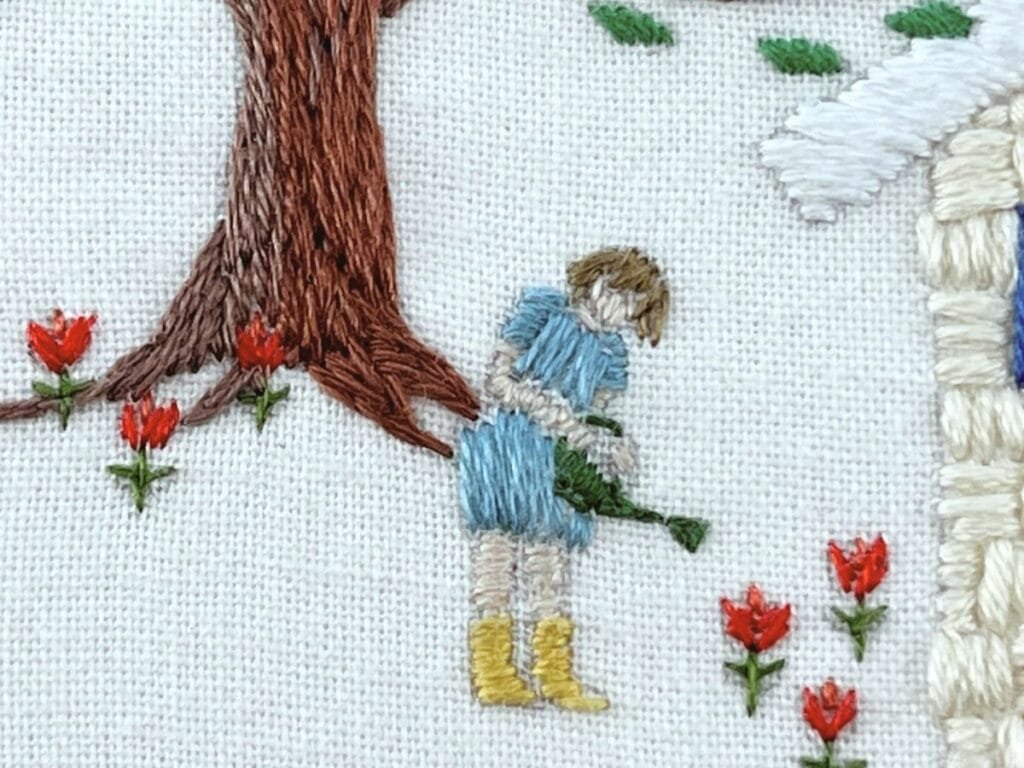
I love tiny embroidery. There’s something delicate and intimate about working at a small scale. At the same time, this project pushed my limits. Even with bifocals, placing the needle exactly where I wanted it was challenging. My eyes tired quickly, and my hands needed frequent breaks.
This pattern may actually be a bit too small for me. While I enjoy fine detail, I think I could achieve a similar feeling at a slightly larger scale. That’s an important realization—one I wouldn’t have reached without trying.
There are parts of this project I truly like and parts I don’t. Accepting both has been part of the learning. I don’t need to love every stitch for the project to be worthwhile.
Stitch Choices and Finding One Thing to Be Proud Of
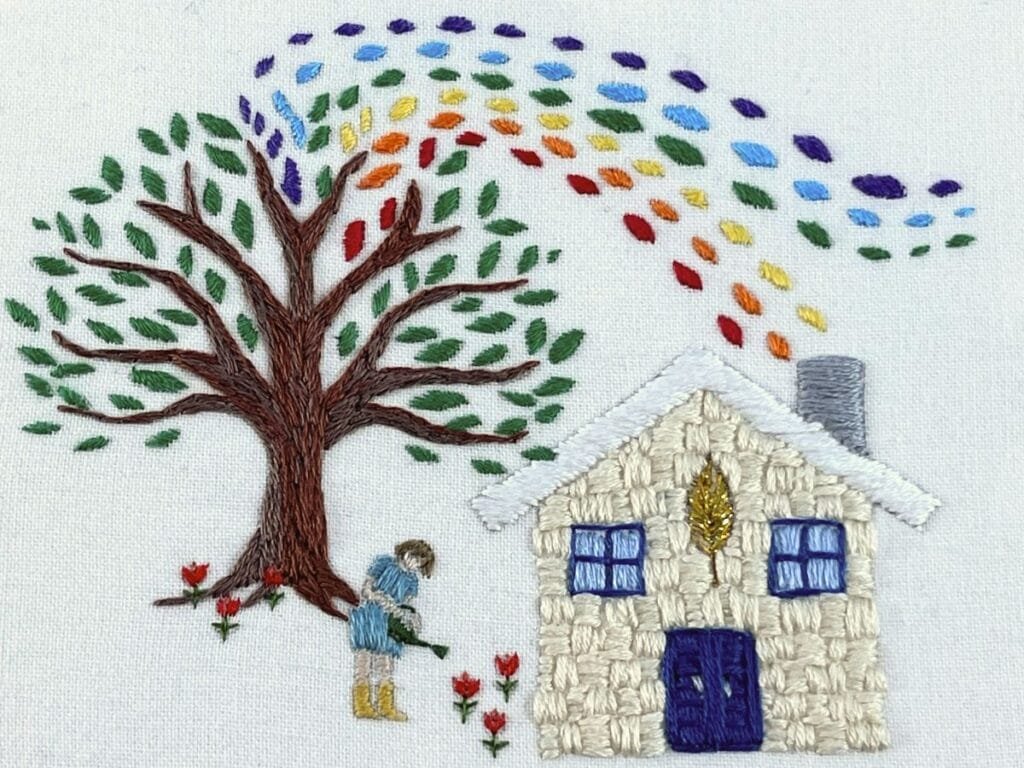
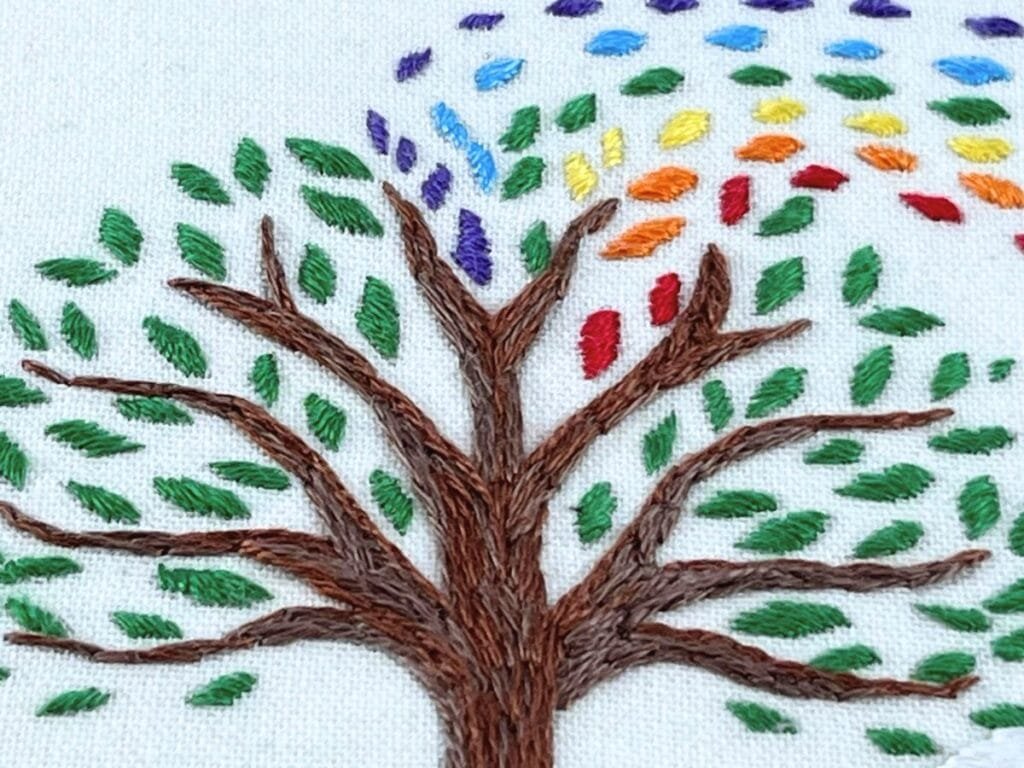
For the tree trunk and branches, I used a mix of split stitch, backstitch, and running stitch. I wanted a painterly feel rather than something perfectly uniform. I worked mostly with two strands of floss, using two different colors to add depth.
Sometimes I stitched with one color at a time. Other times I combined one strand of each color in the needle. That variation created subtle texture, and it’s the part of this project I feel most proud of.
That feels like enough. Pride doesn’t have to be all-or-nothing. It can exist alongside critique. Both can be true at the same time.
Sharing the Pattern and Moving Forward Imperfectly
I’ve made this small hand embroidery pattern available as a free download for anyone who would like to explore it in their own way. It’s a simple design meant to be interpreted slowly and personally, at your own pace.
Sharing it feels like a small act of courage for me. It goes against the part of my brain that says I should wait until I’m better or more experienced. Instead, I’m choosing to meet myself where I am.
I made it to the end of this project, and that matters. If you decide to stitch this pattern, I hope you give yourself the same permission to be imperfect. Learning happens in the doing, not the waiting.
Thank you for being here and for sharing this quiet, creative space with me.