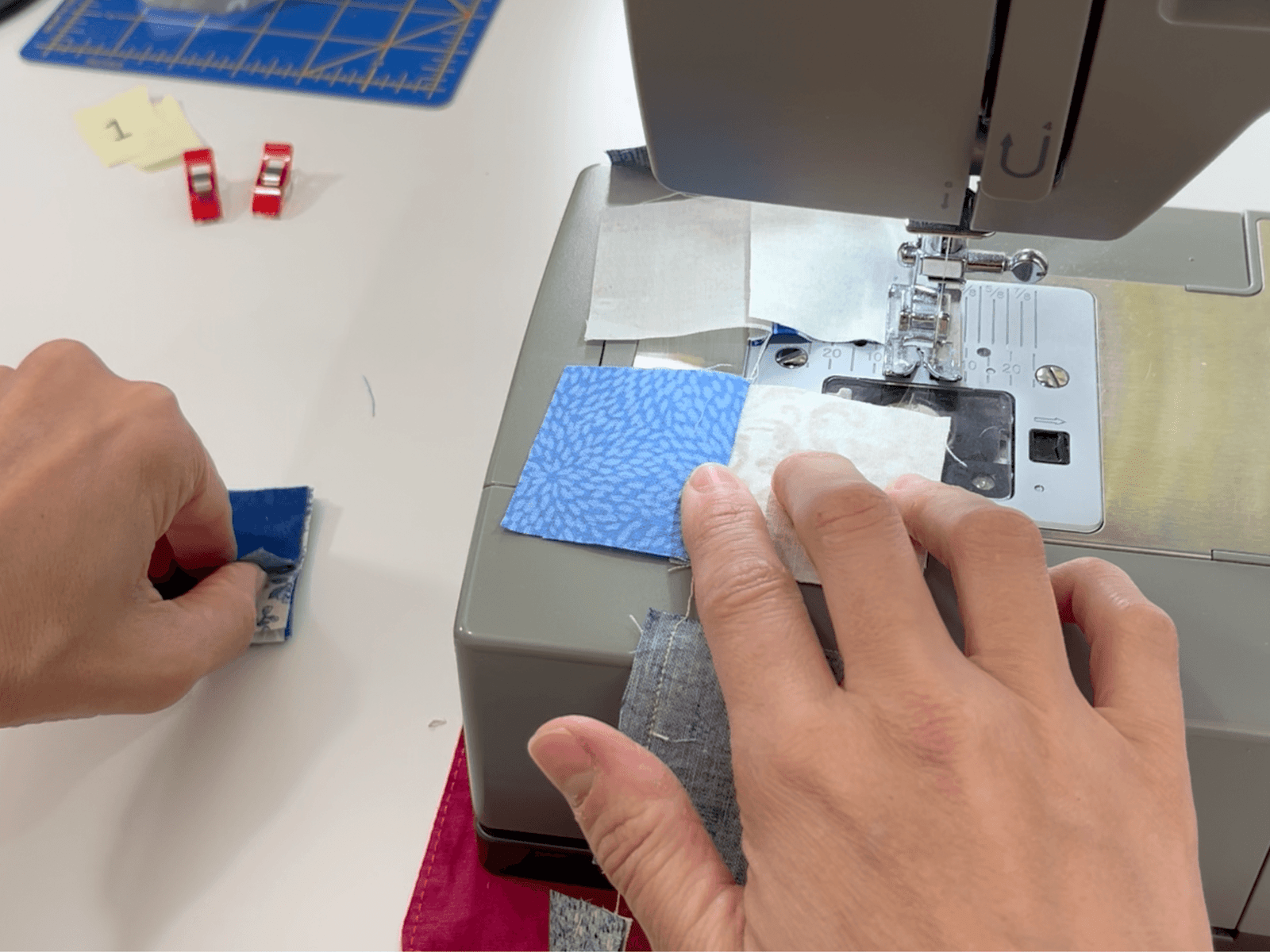
Sewing has often been my calm place. When life feels overwhelming, I turn to my sewing machine and scraps. There’s something grounding about chain piecing fabric, hearing the hum of the machine, and watching quilt blocks come together.
If you want to see how I make nine patches, I have a YouTube tutorial that will walk you through chain piecing four scrappy nine patch blocks at once. The technique is simple, it’s about slowing down, breathing, and finding focus through small, repeatable actions.
Working on a quilting project like this becomes an act of self-care. The rhythm of sewing helps quiet racing thoughts and softens emotional noise. Moreover, each block gives me a chance to practice mindfulness, one seam at a time. I don’t have to solve everything in my life right now. Instead, I just have to sew the next square.
In Dialectical Behavior Therapy (DBT), there’s a concept called wise mind: the balance between emotion and reason. Similarly, quilting helps me find that space. My hands stay busy, my heart stays steady, and little by little, something beautiful begins to take shape.
Why Chain Piecing Supports a Calm, Centered Mind
Chain piecing is more than a sewing technique, it’s a rhythm that restores peace. When I feed fabric pieces through the machine one after another, I stay connected to the present moment. There’s no rush, and there’s no pressure to be perfect. Instead, there’s only motion, color, and breath.
That steady repetition mimics mindfulness practice. It helps calm the nervous system, much like deep breathing or meditation. As a result, each seam becomes a reminder that small steps add up, even when life feels messy.
In DBT, we learn to focus on one thing at a time. Chain piecing supports that perfectly. The task is simple enough to maintain focus, yet creative enough to spark joy. Consequently, it becomes a perfect balance between structure and freedom, something that helps when emotions run high.
Scrappy nine patch blocks are also forgiving. They don’t require symmetry or perfection. That freedom mirrors how DBT teaches self-compassion. Every fabric square, even the uneven ones, still belongs in the final quilted project.
Gathering Scraps and Letting Go of Perfection
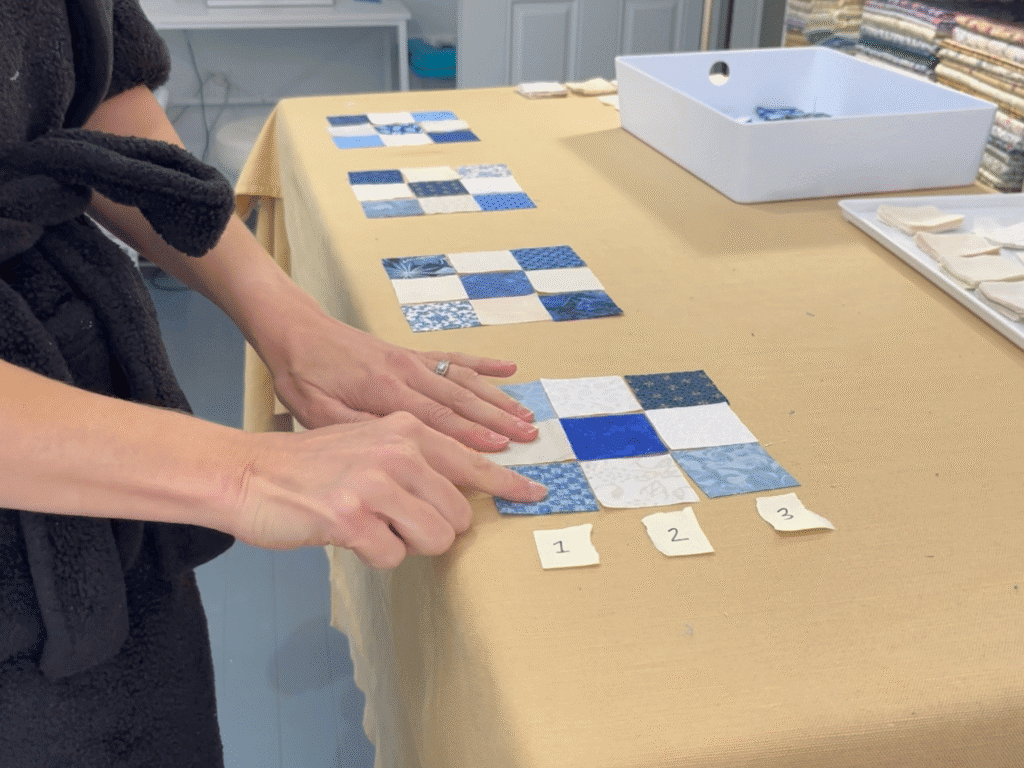
When I gather scraps, I don’t judge what’s in the pile. Instead, I let color and pattern surprise me. Sorting through remnants from past projects reminds me of the DBT skill called radical acceptance, accepting things as they are, not how I wish they were.
Each leftover piece tells a story. Some are from projects that went smoothly; others are from those that didn’t. Together, however, they create something new. That’s healing in itself.
Working on a quilted project made entirely from scraps helps me remember that time and effort is not wasted. Even mistakes have value when you view them as part of a larger picture.
The process is gentle but meaningful. Choosing fabrics, sewing them together, and watching patterns emerge all pull me out of my head and into the moment. Therefore, the act of sewing becomes mindfulness in motion, and it feels good.
Chain Piecing Four Scrappy Blocks as a Mindful Routine
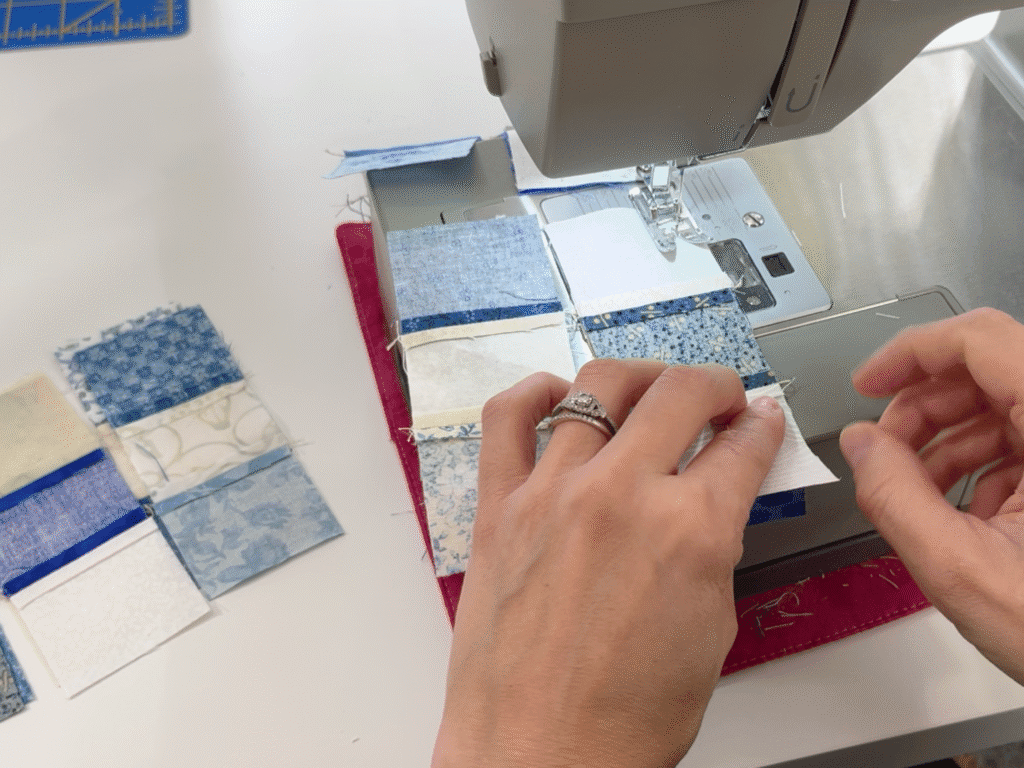
When I sit down to sew, chain piecing four nine patch blocks at once gives my mind structure and focus. It creates flow, the kind of quiet focus that DBT calls participating fully. I don’t have to overthink; instead, I just sew, press, and repeat.
The process becomes a moving meditation. I breathe, I stitch, and I listen to the hum of my machine. Each chain of fabric reminds me that progress happens in small, connected steps. Although I don’t see the finished quilted project right away, I trust it’s forming with every seam.
That mindset carries beyond sewing. In DBT, when emotions build up, we practice doing something soothing yet purposeful. Chain piecing fits perfectly into that idea. It gives both my hands and my heart something steady to hold onto.
By the end of each session, I feel grounded, creative, and accomplished, all without pushing myself too hard.
Pressing, Pausing, and Practicing Patience
After sewing, I like to slow down even more while pressing. I finger press my seams first, and then use my Rowenta steam iron to flatten them completely. The burst of steam feels like a deep exhale, it releases tension, both from the fabric and from me.
Pressing becomes its own kind of therapy. I stand, breathe, and take my time. Each press marks a pause, a reset. Consequently, that small act of patience reminds me that slowing down isn’t falling behind, it’s choosing balance.
In DBT, one goal is to respond instead of react. Sewing teaches that naturally. The process asks for attention, gentleness, and care. The more present I am, the better the results, not only in my quilted project, but also in my mood.
Perfectly Imperfect
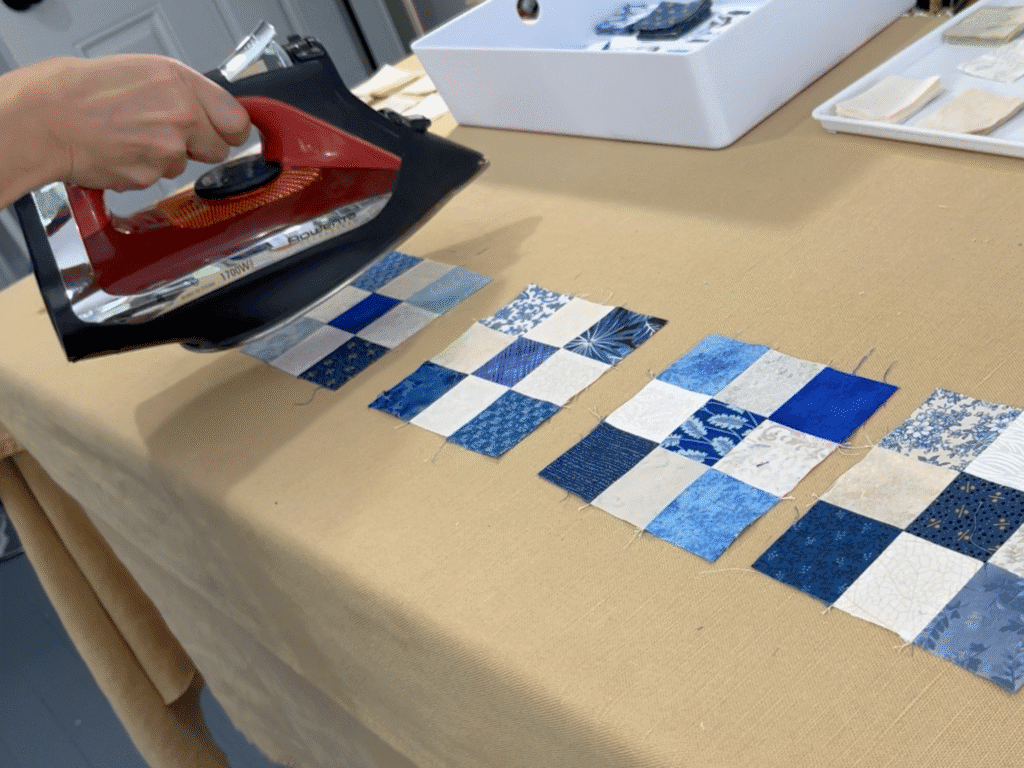
When the blocks are done, I lay them out and admire how all those mismatched pieces come together. It’s a quiet kind of pride. I see order forming out of scraps, and I realize that’s what I’m doing in life too, turning small, imperfect moments into something beautiful.
The final quilted project becomes more than fabric. It’s a reflection of progress, patience, and presence. Every patch reminds me that healing isn’t about perfection; it’s about creating meaning from what we already have.
Chain piecing helps me practice those truths one seam at a time. The rhythm, repetition, and small victories calm my thoughts and lift my spirit. In the end, I feel steady again.
That’s the real power of sewing, it doesn’t just make something lovely to look at. It helps piece you back together, too.